
Are you tired of living with persistent muscle knots, chronic tightness, or pain that keeps you from enjoying an active Seattle lifestyle? Whether it’s nagging shoulder pain from kayaking on Lake Union or tension headaches from long hours at a desk in South Lake Union, you know how frustrating it is when discomfort limits your life. Often, the true source of this pain—a small, hyper-irritable spot in a tight band of muscle called a myofascial trigger point—hasn’t been effectively addressed (Cleveland Clinic, 2025).
At Union Physical Therapy, our Doctors of Physical Therapy utilize Functional Dry Needling as a specialized, modern technique to directly target and release these trigger points. Using a very thin, sterile needle, our therapists can reach deep into muscle tissue that is often inaccessible to hands-on therapies alone (University Health Center – UGA, n.d.). It’s important to understand that dry needling isn’t a standalone cure; it is a powerful tool within a comprehensive physical therapy plan. This integrated approach ensures we not only relieve your immediate symptoms but also address the root cause—like poor movement patterns or muscle imbalances—to deliver lasting results.
Understanding Your Pain: What is a Trigger Point?
To understand how dry needling works, it’s helpful to know what we’re treating. A myofascial trigger point isn’t just a simple “knot”; it’s a localized, dysfunctional band of muscle fibers that can develop from injury, repetitive overuse, or sustained postures (Mayo Clinic Health System, 2025). These points are highly irritable and are associated with a chemical imbalance that leads to a sustained muscle contraction. This contraction reduces local blood flow, trapping pain-producing chemicals and starving the tissue of oxygen (Myopain Seminars, 2022).
Our physical therapists identify and treat two types of trigger points:
- Active Trigger Points: These cause the spontaneous pain you feel, either locally or in a “referred” pattern. For instance, a trigger point in a neck muscle can be the true cause of a persistent tension headache (Brooks Rehabilitation, 2025).
- Latent Trigger Points: These don’t cause pain at rest but contribute to muscle weakness, restricted movement, and stiffness. They are only painful when direct pressure is applied (Brooks Rehabilitation, 2025).
Our Diagnostic Approach: How We Pinpoint the Problem
Effective, lasting relief begins with an accurate diagnosis. Your first visit to our Seattle clinic involves a comprehensive evaluation to identify the precise source of your pain. Your Doctor of Physical Therapy will:
- Listen to Your Story: We start by understanding your history, your symptoms, and how your pain impacts your daily life and activities.
- Perform a Movement Analysis: We will assess your posture, joint range of motion, and functional movements (like squatting or reaching) to identify any underlying biomechanical issues.
- Use Skilled Palpation: Our therapists use expert, hands-on assessment to locate the specific trigger points and taut bands of muscle that are contributing to your symptoms.
This thorough process allows us to confirm if you are a good candidate for dry needling and to create a treatment plan tailored directly to your body and your goals.
The Union PT Approach to Dry Needling: A Physiological “Reset”
When your physical therapist inserts a sterile, single-use needle into a dysfunctional trigger point, it initiates a powerful physiological “reset” for the muscle and nervous system.
First, the needle often elicits a Local Twitch Response (LTR)—an involuntary, brief contraction of the muscle fibers. While the sensation might be surprising, it’s a positive clinical sign that confirms the needle has accurately targeted the dysfunctional tissue (University Health Center – UGA, n.d.). This twitch response is a key part of the therapeutic effect, as it helps disrupt the contracted fibers.
Second, the procedure creates powerful biochemical changes. Research shows that needling a trigger point can help to normalize the chemical environment by reducing pain-sensitizing chemicals and improving blood flow to the area (Myopain Seminars, 2022). This flushes out waste products and delivers the oxygen and nutrients needed for healing. By calming the overactive nerve-muscle connection, dry needling helps the muscle finally relax, restoring its ability to lengthen and contract normally.
Your Path to Recovery: Dry Needling as Part of Your Plan
At Union Physical Therapy, dry needling is a catalyst for your recovery, not the entire treatment. By providing rapid pain relief and releasing muscle inhibition, it creates a crucial “window of opportunity” for you to participate more effectively in the other essential parts of your rehabilitation (Mayo Clinic Health System, 2025). Research shows that dry needling is most effective when integrated into a multimodal treatment plan (Gattie et al., 2017).
Your comprehensive plan of care will include:
- Corrective Exercise: Once pain is controlled, we will prescribe targeted stretching and strengthening exercises to address the underlying muscle imbalances and weakness that caused the trigger points to form.
- Manual Therapy: We use skilled, hands-on techniques like soft tissue mobilization and joint mobilization to improve the overall mechanics of the affected area, complementing the localized effects of dry needling.Patient Education: Lasting recovery requires empowerment. We will educate you on posture, body mechanics, and self-management strategies to help you prevent the recurrence of your symptoms.
Conditions We Effectively Treat with Dry Needling
- Dry needling is a versatile and effective treatment for a wide array of musculoskeletal conditions. Our physical therapists have successfully used this technique to help Seattle residents find relief from:Head, Neck, and Jaw Pain: Tension Headaches, Migraines, Neck Pain, and TMJ Disorders (Brooks Rehabilitation, 2025).
- Shoulder and Arm Pain: Rotator Cuff Tendinopathy, Frozen Shoulder, Tennis Elbow, and Golfer’s Elbow (Mayo Clinic Health System, 2025).
- Back and Hip Pain: Chronic Low Back Pain, Sciatica, and Piriformis Syndrome (Mayo Clinic Health System, 2025).
- Leg and Foot Pain: Hamstring Strains, IT Band Syndrome, Achilles Tendinitis, and Plantar Fasciitis (HonorHealth, 2025).
Begin Your Recovery in Seattle Today
If you’re ready to break the cycle of pain and get back to the life you love, dry needling may be a powerful part of your recovery. Our expert physical therapists will perform a comprehensive evaluation to determine if you are a candidate and design a personalized, effective treatment plan to help you achieve your goals.
Frequently Asked Questions About Dry Needling
What should I do after my session?
Your therapist will give you specific aftercare instructions. Generally, we recommend drinking plenty of water, performing gentle stretches as advised, and avoiding strenuous activity for the rest of the day to help your muscles recover and maximize the benefits.
How many sessions will I need?
This varies depending on your condition. Many patients feel significant improvement after just one or two sessions. For more chronic issues, a full plan of care may involve several visits to achieve lasting results. Your therapist will discuss the expected timeline with you.
How is Dry Needling different from Acupuncture?
This is a common question. While both use a thin needle, they are based on different medical philosophies. Dry needling is a modern Western technique based on anatomy and neurophysiology to release trigger points. Acupuncture is part of Traditional Chinese Medicine focused on balancing the body’s energy flow (“Qi”) along meridians (Mayo Clinic Health System, 2025).
Is Dry Needling painful?
Most patients experience minimal discomfort. You might feel a small prick, followed by a deep ache or a muscle twitch when the trigger point is reached. This response is therapeutic. Any post-treatment soreness typically feels like muscle fatigue after a workout and fades within 24-48 hours (Brooks Rehabilitation, 2025).
What Our Patients Say
References
Brooks Rehabilitation. (2025, September 8). What is Dry Needling & How Does It Work With Physical Therapy? Retrieved from https://brooksrehab.org/resources/what-is-dry-needling/
Cleveland Clinic. (2025, September 8). What Is Dry Needling? Retrieved from https://my.clevelandclinic.org/health/treatments/16542-dry-needling
Gattie, E., Cleland, J. A., & Snodgrass, S. (2017). The Effectiveness of Trigger Point Dry Needling for Musculoskeletal Conditions by Physical Therapists: A Systematic Review and Meta-Analysis. The Journal of orthopaedic and sports physical therapy, 47(3), 133–149. https://doi.org/10.2519/jospt.2017.7096
HonorHealth. (2025, September 8). Five things you should know about therapeutic dry needling. Retrieved from https://www.honorhealth.com/healthy-living/5-things-you-should-know-about-therapeutic-dry-needling
Mayo Clinic Health System. (2025, September 8). Dry needling to treat muscle pain. Retrieved from https://www.mayoclinichealthsystem.org/hometown-health/speaking-of-health/on-pins-and-needles-just-what-is-dry-needling
Myopain Seminars. (2022, February). Description of Dry Needling In Clinical Practice. Retrieved from https://www.myopainseminars.com/wp-content/uploads/2022/02/DryNeedling_ClinicalPracticeEducationalResourcePaper1.pdf
University Health Center – UGA. (n.d.). Dry Needling. Retrieved September 8, 2025, from https://healthcenter.uga.edu/healthtopics/dryneedling/
-
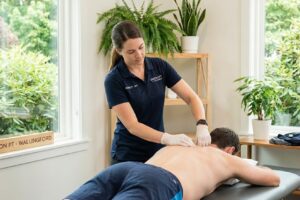 If you are struggling with chronic muscle tightness, “tech neck” from long hours in South Lake Union, or a stubborn running injury from training at Green Lake, dry needling (DN) may be the breakthrough you need. At Union Physical Therapy in Wallingford, we utilize dry needling not as a standalone “cure,” but as a powerful […]