
By Mitch Owens PT, COMT
For the active population in Seattle—whether you are cutting turns at Crystal Mountain, playing in a rec soccer league at Green Lake, or climbing at the gym—an Anterior Cruciate Ligament (ACL) tear is often the injury we fear most. The road to recovery is long, often cited as 9 to 12 months, but the landscape of ACL physical therapy has changed dramatically in recent years.
Gone are the days of returning to sport based simply on time passed since surgery. Modern, evidence-based rehabilitation demands objective data. At Union Physical Therapy, we have integrated advanced technology, including force plates and handheld dynamometry, to take the guesswork out of your recovery.
If you are looking for the best ACL rehab in Seattle, you need a provider who understands that “feeling good” isn’t the same as being ready. Here is how we use advanced metrics to ensure you return to the activities you love safely.
Beyond the Calendar: Why Time-Based Rehab Fails
Historically, surgeons and therapists permitted patients to return to running or cutting sports based on a timeline (e.g., “You can run at 12 weeks”). However, current research indicates that biological healing is only one piece of the puzzle. Functional recovery—how your muscles fire and stabilize your joint—varies wildly from person to person.
Returning to sport before meeting specific strength and symmetry criteria significantly increases the risk of re-injury. In fact, studies suggest that for every month you delay return to sport (up to 9 months) and meet discharge criteria, the re-injury rate drops significantly [1].
The Union PT Difference: Data-Driven Technology
To facilitate a safe return to sport, we utilize clinical tools that provide objective numbers regarding your limb symmetry and power.
1. Dynamometry (Testing Strength)
It is common for the quadriceps muscle to shut down after surgery. Visual estimation of muscle size is not enough. We use digital dynamometers to measure the exact force output of your quads and hamstrings.
- Why it matters: We look for a Limb Symmetry Index (LSI) of >90% compared to your non-surgical leg before clearing you for high-demand activities.
2. Force Plates (Testing Power and Landing)
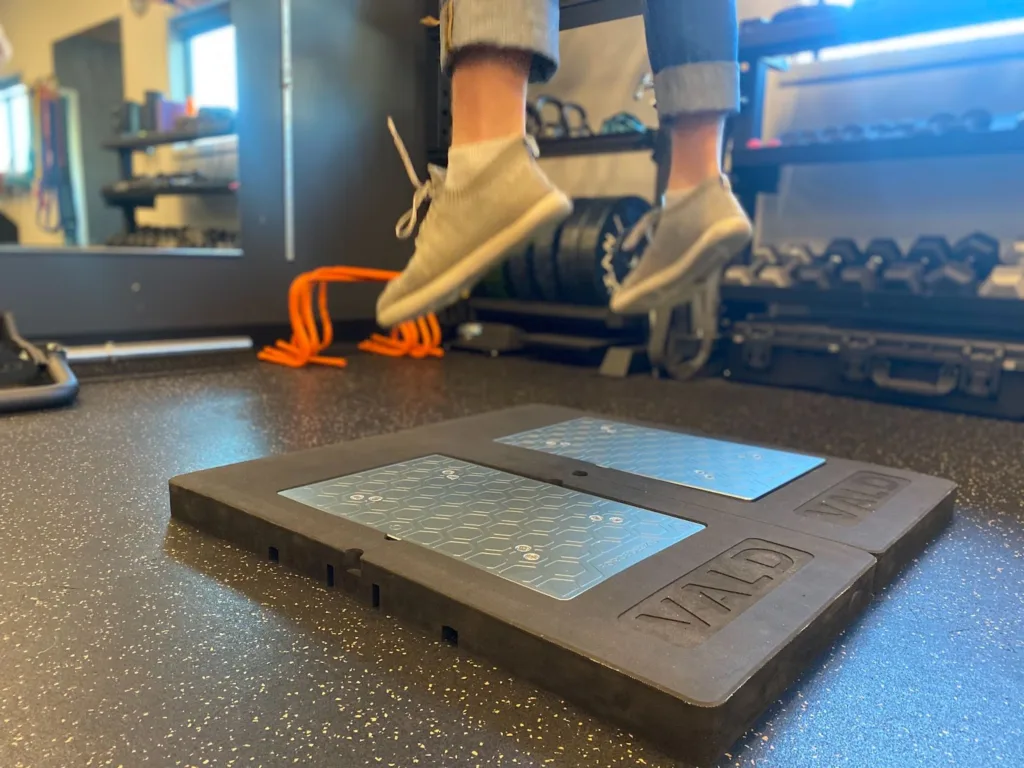
Union PT is one of the few clinics in Seattle equipped with force plate technology. These plates measure the ground reaction forces when you jump and land.
- Why it matters: You might land a jump and “look” stable, but force plates can reveal if you are offloading your surgical leg and compensating with your good leg—a hidden risk factor for future injury.
Our Criteria-Based Framework
We don’t just treat you; we guide you through a phased, criteria-based progression. You do not advance to the next phase until you pass the specific testing for the current one.
Phase 1: The Quiet Knee
Before we build strength, we must eliminate swelling and restore full range of motion. We focus on manual therapy and specific mobility work to normalize your gait.
Phase 2: Loading and Strength
Once the knee is “quiet,” we load the joint. This is where dynamometry becomes crucial. We track your progressive overload to ensure your graft is maturing and your muscles are firing.
Phase 3: Return to Running/Jogging
“When can I start running after ACL surgery?”
This is the most common question we hear. We do not base this on a calendar date. You are cleared to run when you demonstrate:
- 95% knee extension range of motion.
- 70-80% quadriceps strength symmetry.
- Ability to perform repetitive hopping without pain or swelling.
Phase 4: Return to Sport Training
This involves plyometrics, agility drills, and sport-specific movements relevant to your life, whether that is hiking the Cascades or playing ultimate frisbee.
Return to Sport Testing: The Final Exam
Before you are discharged, you undergo a comprehensive battery of tests. This includes hop testing, strength testing, and movement quality assessments using our force plates. We also assess psychological readiness, as fear of movement (kinesiophobia) is a major barrier to returning to performance [2].
Patient Success Stories
We take pride in getting our Seattle athletes back to their passions.
“I have been visiting Michelle from Union PT for the past 10 months after an ACL surgery. I can’t say enough how positive the experience was – Michelle is highly knowledgeable, professional, very patient… After 10 months I am finally back playing volleyball and can’t wait to get back to skiing this winter season.”
— Eli Shechtman, Google Review
“7 months after ACL surgery I’m back to ultrarunning! The whole team is kind, knowledgeable, and very good at what they do. I’ve seen countless PTs in my life, and these folks are truly my favorite.”
— Isabel Reback, Google Review
Ready to Reclaim Your Active Life?
Don’t leave your knee health to chance. If you are searching for ACL physical therapy in Seattle that utilizes the latest technology and a rigorous, evidence-based framework, we are here to help.
Schedule Your Evaluation Today
Frequently Asked Questions
Do I really need force plate testing for ACL rehab?
While not mandatory for basic walking, force plates provide critical data for athletes. They detect subtle compensations that the naked eye cannot see, ensuring you aren’t favoring your surgical leg when you return to high-impact sports.
How long does ACL rehab take?
While most grafts biologically heal by 9 months, a full return to sport depends on meeting functional criteria. At Union PT, we focus on milestones rather than just months to ensure a safe return.
Who is the best physical therapist for ACL rehab in Seattle?
The best therapist is one who uses objective testing (like dynamometry) rather than guessing. At Union PT, our team is trained in sports physical therapy and specifically equipped to handle complex post-operative recovery.
References
- Grindem, H., Snyder-Mackler, L., Moksnes, H., Engebretsen, L., & Risberg, M. A. (2016). Simple decision rules can reduce reinjury risk by 84% after ACL reconstruction: the Delaware-Oslo ACL cohort study. British Journal of Sports Medicine, 50(13), 804–808. https://doi.org/10.1136/bjsports-2016-096031
- Ardern, C. L., Taylor, N. F., Feller, J. A., & Webster, K. E. (2013). A systematic review of the psychological factors associated with returning to sport following injury. British Journal of Sports Medicine, 47(17), 1120–1126. https://doi.org/10.1136/bjsports-2012-091203