
Running is woven into the fabric of life in Seattle. It’s the rhythm of footsteps along the Burke-Gilman Trail, the challenge of the hills in Discovery Park, and the community spirit at the starting line of the Seattle Marathon. When an injury sidelines you, it’s more than a physical setback—it’s a frustrating disruption to your routine and your identity.
At Union Physical Therapy, our Doctors of Physical Therapy are runners and outdoor athletes, just like you. We get it. Our approach is a proactive partnership designed not just to treat your pain, but to analyze your movement, rebuild your strength, and make you a more efficient and resilient runner than you were before.
Beyond the Symptoms: Understanding Your Running Injury
That nagging ache on the outside of your knee (IT Band Syndrome), the sharp pain in your shin (Shin Splints), or the first-step agony of Plantar Fasciitis are where you feel the problem, but it’s rarely where the problem starts. Running injuries are most often overuse injuries—the result of repetitive stress overwhelming your body’s capacity to adapt.¹ These issues are frequently driven by subtle imbalances in strength, mobility, or biomechanics that have a chain reaction effect down to your feet.
This is why a holistic, evidence-based approach is essential. Your knee pain isn’t just a knee problem; it’s a whole-body movement problem.
Our Diagnostic Approach: A Deep Dive into Your Running Form
An effective treatment plan begins with a precise diagnosis. We don’t guess; we investigate. Our meticulous diagnostic process is designed to uncover the “why” behind your pain, utilizing a combination of hands-on expertise and advanced technology to create a clear, science-backed path to recovery.
The Comprehensive Biomechanical Evaluation
Your first appointment is a head-to-toe orthopedic evaluation of your entire body as a running system. We assess the key factors that influence your running mechanics and injury risk, including:
- Strength: We meticulously test major muscle groups from your core and hips down to your calves and feet, identifying the specific strength deficits that contribute to faulty movement patterns.
- Mobility: We evaluate the available range of motion in your hips, knees, and ankles to find any restrictions that force other parts of your body to compensate, leading to tissue overload.
- Balance & Motor Control: We assess your single-leg stability and your body’s ability to control movement, which are fundamental for a stable and efficient running stride.
The Power of Seeing: Video Gait Analysis
Running happens too quickly for the naked eye to catch the subtle biomechanical flaws that lead to injury. We use high-speed cameras and specialized software to record you running on a treadmill and break down your running cycle frame by frame. This powerful tool allows our physical therapists to objectively analyze critical metrics like:
- Cadence (steps per minute): Increasing cadence even slightly has been shown to significantly reduce impact forces on the knee and hip joints.²
- Foot Strike Pattern: Analyzing how and where your foot contacts the ground.
Pelvic Drop (Trendelenburg Gait): A common sign of weak hip muscles that can lead to a cascade of issues down the leg. - Knee Alignment (Knee Valgus): Observing if your knee collapses inward on impact, a major contributor to runner’s knee.³
There is often a powerful “aha!” moment when a runner sees a clear visual of their form. This “seeing is believing” principle transforms abstract advice into concrete understanding, empowering you to take an active role in your own recovery.
The Union PT Approach: Your Path Back to the Pavement
Healing the injury is just the first step. Our ultimate goal is to build a more durable and powerful runner. Our evidence-based treatment plans are always one-on-one with a Doctor of Physical Therapy and combine:
- Hands-On Manual Therapy: We use skilled, targeted manual techniques to restore joint mobility, release muscle tightness, and improve tissue health. This creates a window of opportunity to start moving correctly without pain.
- Targeted Therapeutic Exercise: Based on your evaluation, we design a personalized strength program that addresses the true root cause of your injury—which research consistently shows is often weakness in the hip and core muscles.³
- Neuromuscular Re-education & Gait Retraining: We don’t just build strength; we teach your body how to use it. Through specific cues and drills, we help you correct the movement patterns that led to injury, making your running form more efficient and ensuring the problem doesn’t return.
Whether you’re dealing with Runner’s Knee (PFPS), Shin Splints (MTSS), Achilles Tendinopathy, Plantar Fasciitis, or IT Band Syndrome, our approach is designed to provide not just relief, but long-term resilience.
Ready to run without pain? Our Doctors of Physical Therapy are experts in analyzing and treating running injuries.
Schedule Your Comprehensive Running Analysis Today
Begin Your Recovery in Seattle Today
We help Green Lake runners and Seattle marathoners overcome common issues like runner’s knee and shin splints through gait analysis, biomechanical correction, and customized strength programs.
Frequently Asked Questions About Running Physical Therapy
How can PT make me a better, faster runner, not just an uninjured one?
This is the essence of performance physical therapy. By identifying and correcting inefficiencies in your running form through gait retraining and addressing your specific strength deficits, we help you become a more mechanically efficient runner. This means less wasted energy with each stride, which translates directly to improved endurance, better performance, and a lower risk of future injuries.
Do I have to stop running completely during physical therapy?
Not always. Our first goal is to modify your training to a level that doesn’t cause pain. This might mean reducing your mileage, avoiding hills for a period, or substituting some runs with non-impact cross-training. The goal is to allow the irritated tissue to heal while maintaining your cardiovascular fitness, then methodically and safely rebuild your running program.
My knee hurts, but my PT is focused on strengthening my hips. Why?
This is a core principle of modern running rehabilitation. A large body of research has shown that many knee injuries are the direct result of “upstream” weakness, particularly in the hip muscles (your glutes).³ Weak hips lead to poor control of the thigh bone, causing the knee to collapse inward and increasing stress on the kneecap and other tissues. By strengthening the hips, we fix the cause, not just the symptom.
What is a running gait analysis?
A running gait analysis is a detailed assessment where a Doctor of Physical Therapy uses high-speed video to meticulously evaluate your running form. We analyze key metrics like your cadence, foot strike, and pelvic alignment to identify specific biomechanical patterns that contribute to injury and limit performance. It allows us to pinpoint the root cause of your pain.
Hear From Seattle Runners We’ve Helped Get Back on Track
References
van der Worp MP, ten Haaf DSM, van Cingel R, de Wijer A, Nijssen M, Staal JB. Injuries in runners; a systematic review on risk factors and sex differences. PLoS One. 2015;10(2):e0114937. Published 2015 Feb 23. https://www.ncbi.nlm.nih.gov/pmc/articles/PMC4338213/
Heiderscheit BC, Chumanov ES, Michalski MP, Wille CM, Ryan MB. Effects of step rate manipulation on joint mechanics during running. Med Sci Sports Exerc. 2011;43(2):296-302. https://pubmed.ncbi.nlm.nih.gov/20581720/
Neal BS, Barton CJ, Gallie R, O’Halloran P, Morrissey D. Runners with patellofemoral pain have altered biomechanics which targeted interventions can modify: A systematic review and meta-analysis. Gait Posture. 2016;45:69-82. https://pubmed.ncbi.nlm.nih.gov/26979895/
-
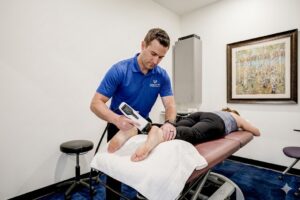 If you are struggling with chronic heel pain that makes your first steps in the morning extremely painful, focused extracorporeal shockwave therapy (fESWT) is the non-invasive treatment you need. Unlike traditional methods, fESWT acts as a “biological reset button” to restart the healing process at a cellular level. At Union Physical Therapy in Wallingford, we […]
 -
 This week, Washingtonians rejoice as access to many of our favorite state lands open up for the first time after closing down due to precautions surrounding the Coronavirus pandemic. The collective glee is palpable as antsy recreationists, athletes and mountain-lovers return to the trails, waterways, and parks that they love. Meanwhile my PT colleagues and […]
 -
 I love running and am happy to see that this new/old trend has moved people who previously never liked or wanted to run to go out and move. Barefoot or minimalist running can be a great tool and a useful way to improve your running form if used properly. As a physical therapist I have […]