
A sports injury is more than frustrating—it’s a barrier preventing you from engaging with the Pacific Northwest lifestyle you love. Whether it’s keeping you off the soccer pitch at Memorial Stadium, the trails at Discovery Park, or the slopes at Crystal Mountain, an injury can disrupt your entire routine
At Union Physical Therapy, we specialize in helping Seattle’s diverse community of athletes get back to their passions. We understand your goal isn’t just to be pain-free; it’s to return to your sport stronger, faster, and more resilient than before. Our approach combines advanced diagnostic technology with a modern, evidence-based understanding of athletic recovery to address the root cause of your injury and build a foundation for lasting performance.
Understanding Your Injury (The Subjective Experience)
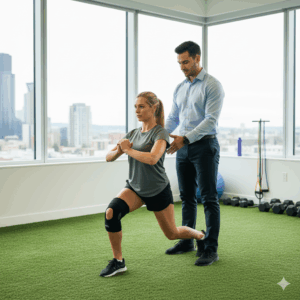
Pain is a signal that something in the body’s kinetic chain has broken down. In our clinical experience, many of our patients in Wallingford, Fremont, and across Seattle develop injuries from a combination of factors, including the repetitive stress of training, biomechanical imbalances, or the unique physical demands of their sport. Our first step is to listen to your story to understand how your injury impacts your life.
Common conditions we treat include:
- Acute Injuries: ACL tears, rotator cuff strains, ankle sprains, and hamstring pulls common in field and court sports.
- Overuse and Chronic Conditions: Runner’s knee, tennis elbow, and shoulder impingement from repetitive activity.
- Post-Surgical Rehabilitation: Expert guidance to restore strength, mobility, and confidence after procedures like ACL reconstruction or shoulder surgery.
Specialized Care for Seattle’s Outdoor Athletes: We have deep experience treating the unique injuries sustained by our region’s active community, including tailored programs for Climbing Injury Treatment and our Skihab program for Skiing and Snowboarding.
Our Diagnostic Approach (The Objective Findings)
Effective, lasting treatment begins with a precise diagnosis. At Union PT, we go beyond a standard physical exam to understand the “why” behind your injury. Our comprehensive assessment is built on a foundation of advanced technology and movement analysis to create an objective, complete picture of your physical capacity.
- Comprehensive Movement Analysis: We start by observing your functional movements to identify asymmetries or faulty patterns that may have contributed to your injury.
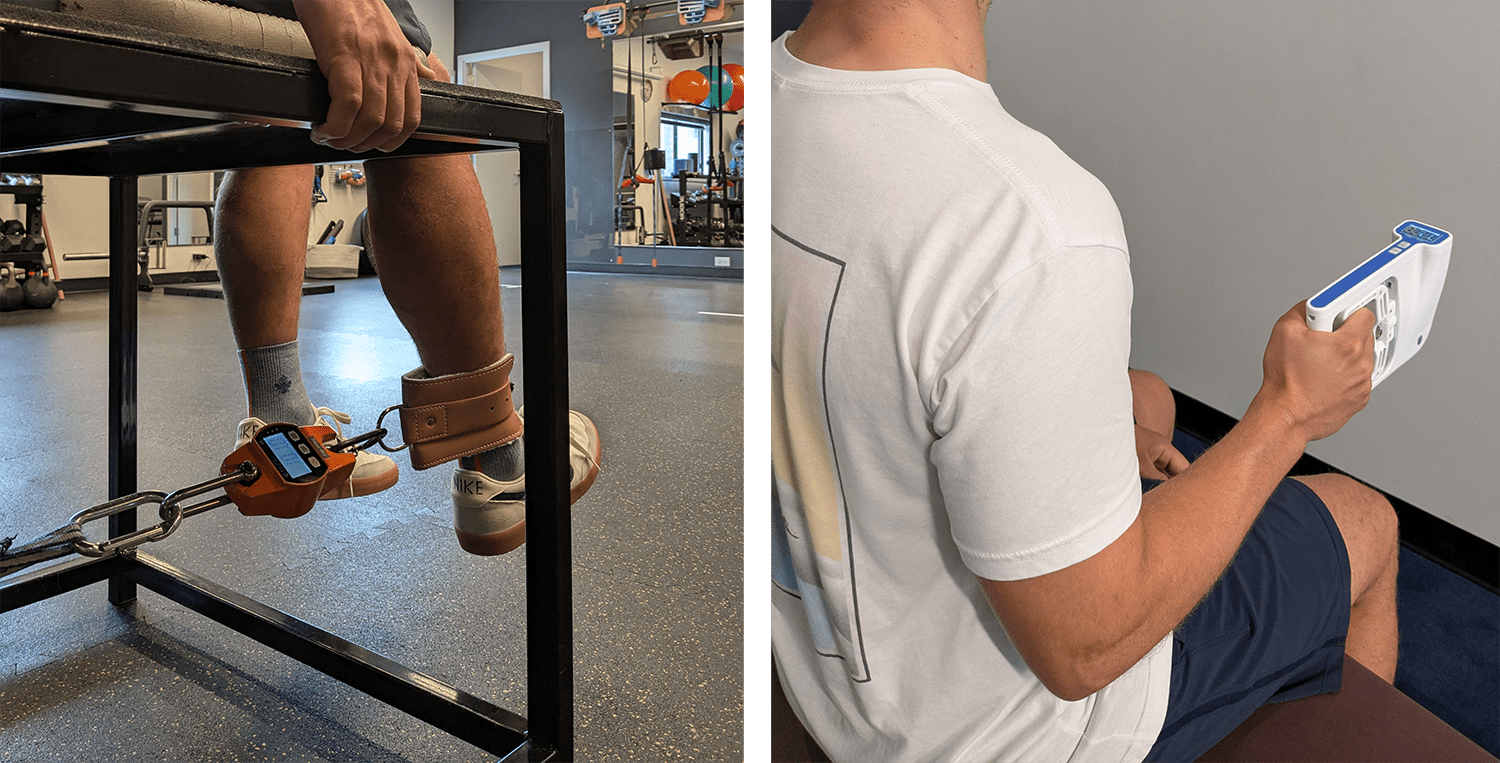
- Force Plate Analysis: We use VALD Force Plates to objectively measure what the naked eye cannot see. This technology quantifies your strength, power, and neuromuscular control during activities like jumping and landing. By analyzing metrics like Rate of Force Development (how quickly you generate force) and landing asymmetries, we can uncover hidden deficits that increase your risk of re-injury (Brughelli et al., 2010). You can learn more about our process on our Return to Sport Testing page.
- Handheld Dynamometry: We use dynamometers to get precise, objective data on your muscle strength. A key goal before returning to sport is achieving at least 95% strength symmetry between your injured and uninjured limbs, a critical factor in preventing re-injury (Kyritsis et al., 2016).
This data-driven approach allows us to develop a treatment plan that targets the source of the problem, not just the symptoms.
The Union PT Approach (Our Assessment & Tools)
The science of injury recovery has evolved, and our methods are built on the latest clinical research to facilitate optimal healing and accelerate your return to sport.
From RICE to PEACE & LOVE
For decades, the standard for acute injuries was RICE (Rest, Ice, Compression, Elevation). However, modern research shows that inflammation is a necessary part of healing and that aggressively suppressing it can hinder long-term tissue repair (Dubois & Esculier, 2020). We follow the PEACE & LOVE protocol:
- PEACE (First 1-3 Days): Protect the area, Elevate the limb, Avoid anti-inflammatory modalities, Compress to manage swelling, and Educate yourself on active recovery.
- LOVE (After a Few Days): Introduce Load to promote tissue remodeling, cultivate Optimism, increase Vascularisation through pain-free cardio, and begin targeted Exercise.
An Evidence-Based, Active Toolkit
Our treatment plans are overwhelmingly active, focusing on what you do to rebuild capacity. We integrate a suite of scientifically-backed interventions:
- Therapeutic Exercise: This is the cornerstone of rehabilitation. A landmark meta-analysis demonstrated that strength training can reduce sports injuries to less than one-third and cut overuse injuries nearly in half (Lauersen et al., 2014).
- Neuromuscular Re-education: Injury disrupts the brain-body connection. We use specific exercises to retrain this link, improving your balance, coordination, and dynamic joint stability to protect against future injury (Hübscher et al., 2010).
- Manual Therapy: Our therapists use skilled, hands-on techniques like joint mobilization and soft tissue release to reduce pain, improve mobility, and restore normal joint mechanics.
- Blood Flow Restriction (BFR) Training: BFR is a powerful tool that allows us to build muscle strength using very light loads, making it ideal for early post-operative recovery as it stimulates significant gains without stressing healing tissues (Hughes et al., 2017). Learn more about our Blood Flow Restriction Training.
Advanced Modalities: When appropriate, we utilize other evidence-based tools like Functional Dry Needling and Extracorporeal Shockwave Therapy.
Your Path to Peak Performance (The Plan)
We guide you through a structured, five-phase journey from the moment of injury to a full, confident return to your sport.
- Acute Phase: Aligning with the PEACE protocol, we focus on protecting the tissue, managing pain, and initiating gentle, pain-free movement to promote healing.
- Sub-acute Phase: We begin to introduce optimal loads to the injured area, working to regain full mobility and build foundational strength.
- Strength Training Phase: We progressively increase muscular strength and endurance with more dynamic, whole-body movements to provide robust support to the injured area.
- Sport Activity Phase: Rehabilitation begins to mimic the specific demands of your sport, introducing controlled drills to rebuild strength, agility, and coordination in patterns that are directly transferable to your activity.
- Return to Activity Phase: This is the final step. Using our force plates and objective testing, we ensure you have met all physical and psychological criteria for a safe return, minimizing the risk of re-injury.
Begin Your Recovery in Seattle Today
Expert sports physical therapy in Seattle for athletes of all levels. Our evidence-based approach helps you recover stronger and prevent re-injury.
Frequently Asked Questions about Sports PT
How soon after a sports injury should I see a physical therapist?
For most soft-tissue injuries, it’s best to see a physical therapist within the first few days. Early intervention allows us to accurately diagnose the injury, provide education on the PEACE & LOVE protocol to optimize healing, and begin gentle, active recovery exercises that can prevent stiffness and muscle loss.
What does a “return to sport” program involve?
A modern return-to-sport program goes beyond just being pain-free. It involves a battery of objective tests—using force plates, dynamometry, and functional hop testing—to ensure your injured limb has regained at least 95% of the strength, power, and stability of your uninjured side. It also includes assessing your psychological readiness to return to competition confidently.
Why choose a specialist sports PT over a general physical therapist?
A specialist sports PT has advanced training and a deeper understanding of the biomechanics and physical demands of specific sports. We utilize specialized equipment like force plates for return-to-sport testing and are experts in designing rehabilitation programs that not only heal the injury but also enhance athletic performance and prevent future issues.
How does sports physical therapy help athletes recover faster?
We help athletes recover faster by using a data-driven, evidence-based approach. Advanced tools like force plates identify specific deficits, while modern protocols like PEACE & LOVE and modalities like BFR training optimize healing and accelerate strength gains safely. This precision allows for a more efficient and targeted recovery.
What injuries do sports physical therapists treat?
We treat a wide range of acute and chronic musculoskeletal injuries. This includes everything from ligament sprains and muscle strains common to field sports, like ACL tears and hamstring pulls, to overuse conditions like runner’s knee, rotator cuff tendonitis, and injuries specific to outdoor sports like climbing and skiing.
What Our Athletes Say
References
Brughelli, M., Cronin, J., Levin, G., & Chaouachi, A. (2010). Understanding change of direction ability in sport. Journal of Strength and Conditioning Research, 22(5), 1641-1656. https://doi.org/10.1519/JSC.0b013e31818789fb
Dubois, B., & Esculier, J. F. (2020). Soft-tissue injuries simply need PEACE and LOVE. British Journal of Sports Medicine, 54(2), 72-73. http://dx.doi.org/10.1136/bjsports-2019-101253
Hübscher, M., Zech, A., Pfeifer, K., Hänsel, F., Vogt, L., & Banzer, W. (2010). Neuromuscular training for sports injury prevention: a systematic review. Medicine & Science in Sports & Exercise, 42(3), 413-421. https://doi.org/10.1249/MSS.0b013e3181b88d37
Hughes, L., Paton, B., Rosenblatt, B., Gissane, C., & Patterson, S. D. (2017). Blood flow restriction training in clinical musculoskeletal rehabilitation: a systematic review and meta-analysis. British Journal of Sports Medicine, 51(13), 1003-1011. http://dx.doi.org/10.1136/bjsports-2016-097071
Kyritsis, P., Bahr, R., Landreau, P., Miladi, R., & Witvrouw, E. (2016). Likelihood of ACL graft rupture: not meeting six clinical discharge criteria before return to sport is associated with a four times greater risk of rupture. British Journal of Sports Medicine, 50(15), 946-951. http://dx.doi.org/10.1136/bjsports-2015-095908
Lauersen, J. B., Bertelsen, D. M., & Andersen, L. B. (2014). The effectiveness of exercise interventions to prevent sports injuries: a systematic review and meta-analysis of randomised controlled trials. British Journal of Sports Medicine, 48(11), 871-877. http://dx.doi.org/10.1136/bjsports-2013-092538
Authored by: Mitch Owens, PT, COMT
Mitch is a co-founder of Union Physical Therapy and a board-certified Orthopedic Manual Therapist. He specializes in treating athletes of all levels, combining his expertise in biomechanics with advanced diagnostics to help patients return to the sports they love.
Medically Reviewed by: Elisa Owens, DPT on September 4, 2025.
-
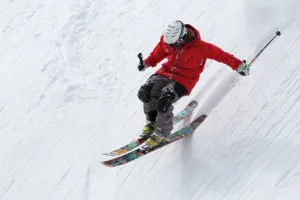 For the mountain athlete, an injury isn’t just an inconvenience—it’s a threat to your identity. Whether you measure your weekends in pitches, powder days, or vertical feet, your pursuits demand more from your body. A standard rehab plan that ignores the unique demands of scree fields, skin tracks, and crimp-strength simply won’t cut it. That’s […]
 -
 Let’s start out by saying, we have all been there…you know the 1 hour into the trail and the weird pressure points and pains start to make their way onto your body and you can’t believe you’ve only been hiking for 1 hour, when it feels like at least 5. So, what is the solution […]