
Post-Operative Physical Therapy in Seattle: Your Partner in Recovery
Undergoing surgery is a significant step towards resolving pain and restoring function. But the procedure itself is only the beginning of your journey. The success of your surgery is critically linked to the quality of your post-operative rehabilitation. At Union Physical Therapy, we understand that your goal isn’t just to heal, but to return to the active Seattle lifestyle you love—whether that means running around Green Lake, climbing at Stone Gardens, or simply getting through your workday without pain.
Our team of expert Doctors of Physical Therapy specializes in creating personalized post-surgical rehabilitation plans. We combine hands-on manual therapy with evidence-based exercise programs to help you manage pain, restore mobility, and rebuild your strength, ensuring you make a complete and confident return to your life.
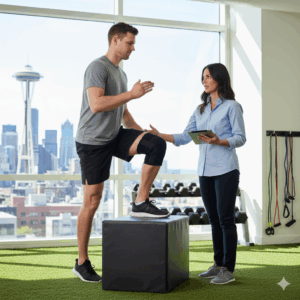
Why is Physical Therapy Essential After Surgery?
After a surgical procedure, your body begins a natural healing process that can lead to inflammation, stiffness, pain, and the formation of scar tissue. Without guided intervention, you can lose significant range of motion and strength, which can compromise the long-term success of your surgery.
In our clinical experience, patients who engage in a structured physical therapy program after surgery experience a faster, more complete recovery.¹ A dedicated rehabilitation plan is designed to:
- Control Pain and Swelling: We use proven techniques to manage post-operative discomfort and inflammation.
- Restore Range of Motion: Gentle, targeted manual therapy and exercises prevent stiffness and break down scar tissue that can limit mobility.
- Rebuild Muscle Strength: Surgery and the subsequent period of immobility can lead to significant muscle atrophy. We design safe, progressive strengthening programs to rebuild support around the surgical site.
- Improve Functional Movement: Our ultimate goal is to help you return to your daily activities. We retrain your body to move correctly and efficiently, whether you’re walking, lifting, or returning to sport.
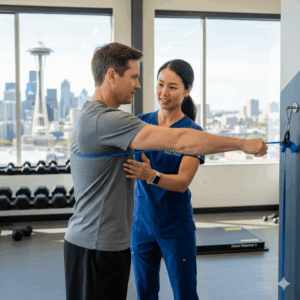
Your First Post-Operative Visit: What to Expect
Your path to recovery begins with a thorough and thoughtful evaluation. We work closely with your surgeon, following their specific protocols to ensure your rehabilitation is both safe and effective. Your first visit to our Seattle clinic will involve:
- A Detailed Discussion: We’ll listen carefully as you describe your surgical experience, your current symptoms, and most importantly, your personal goals for recovery.
- A Comprehensive Assessment: Your physical therapist will gently examine the surgical area to assess swelling, incision healing, and sensitivity. We will take baseline measurements of your range of motion and functional strength to track your progress over time.
- Personalized Plan Creation: Based on this evaluation and your surgeon’s recommendations, we will create a customized treatment plan. We’ll explain every step of the process, ensuring you feel informed and confident in your path forward.
The Union PT Approach: Advanced Care for a Better Recovery
We believe that post-operative rehab should be active, engaging, and tailored to your unique body and goals. Our approach is built on a foundation of one-on-one care that integrates advanced techniques with functional, real-world exercise.
Your personalized program may include:
- Manual Therapy: Our therapists use skilled, hands-on techniques like soft tissue mobilization and joint mobilization to reduce pain, minimize scar tissue formation, and restore healthy joint mechanics.
- Targeted Therapeutic Exercise: We move beyond generic exercise sheets. Your program will consist of specific, progressive exercises designed to rebuild strength, endurance, and neuromuscular control around the surgical site.
- Neuromuscular Re-education: We help you retrain your brain-body connection to ensure you are moving with proper form and stability, which is crucial for preventing re-injury.
Advanced Tool: Blood Flow Restriction (BFR) Training
For many post-operative patients, strengthening is a challenge because the healing tissues cannot yet tolerate heavy loads. Blood Flow Restriction (BFR) training is a cutting-edge technique we use to solve this problem. By using a specialized medical cuff to safely reduce blood flow to the exercising limb, we can create a metabolic response that triggers significant muscle strength and growth using very light weights. Research has shown BFR to be a powerful tool for accelerating recovery and preventing muscle loss after surgery.²
We have extensive experience helping patients recover from a wide range of orthopedic surgeries, including:
- Knee: ACL Reconstruction, Meniscus Repair, Patellar Tendon Repair
- Shoulder: Rotator Cuff Repair, SLAP Repair, Bankart Repair
- Hip: Total Hip Replacement, Hip Labral Repair
- Foot & Ankle: Achilles Tendon Repair, Ankle ligament reconstruction
- Spine: Fusions, Laminectomies, Discectomies
- General: Total Joint Replacements, Tendon and Ligament Repairs
Your Path Back to Full Function
Recovery is a phased process, and we are with you every step of the way.
- Phase 1: The Protective Phase (Weeks 1-6): The initial focus is on protecting the surgical repair, managing pain and swelling, and gently restoring basic range of motion.
- Phase 2: The Strengthening Phase (Weeks 6-12): As your body heals, we will progressively increase the intensity of your exercises to rebuild strength and endurance in the muscles supporting the joint.
- Phase 3: The Return to Function Phase (3+ Months): This is where we focus on your specific goals. For an athlete, this means sport-specific drills.
For a South Lake Union tech worker, it might mean mastering pain-free ergonomics at your desk. We simulate the demands of your life to ensure you are confident and resilient.
If you’re facing surgery or have recently had a procedure, don’t leave your recovery to chance. Schedule your post-operative assessment at our Seattle physical therapy clinic today.
Begin Your Recovery in Seattle Today
Expert post-operative physical therapy in Seattle. Our specialists help you recover faster from ACL, rotator cuff, or joint replacement surgery.
Frequently Asked Questions about Post-Surgery Rehab
How many sessions will I need?
The number of sessions depends on your specific condition and goals. BFR is typically performed 2-3 times per week. Your therapist will discuss the recommended frequency and duration as part of your overall physical therapy plan of care.
Does BFR hurt?
BFR is not typically painful, but it does create a unique sensation. You can expect your muscles to feel a deep burn or fatigue, similar to how they would feel at the end of a very challenging set of heavy lifts. This is a sign that the therapy is working effectively.
Is BFR training safe?
Yes, when performed by a trained physical therapist using FDA-approved equipment. We conduct a thorough screening for any contraindications and use precise pressure measurements to ensure safety. Research has consistently shown that BFR, when applied correctly, is a safe and effective rehabilitation tool (Patterson & Brandner, 2018).